
Breathing Practices
Breathing is one of the most accessible ways to influence your nervous system. It’s something you’re already doing, but small shifts in how you breathe can significantly change how your body feels. When your system is overwhelmed, anxious, or shut down, breathing can help create just enough space to begin regulating.
Why Breathing Works
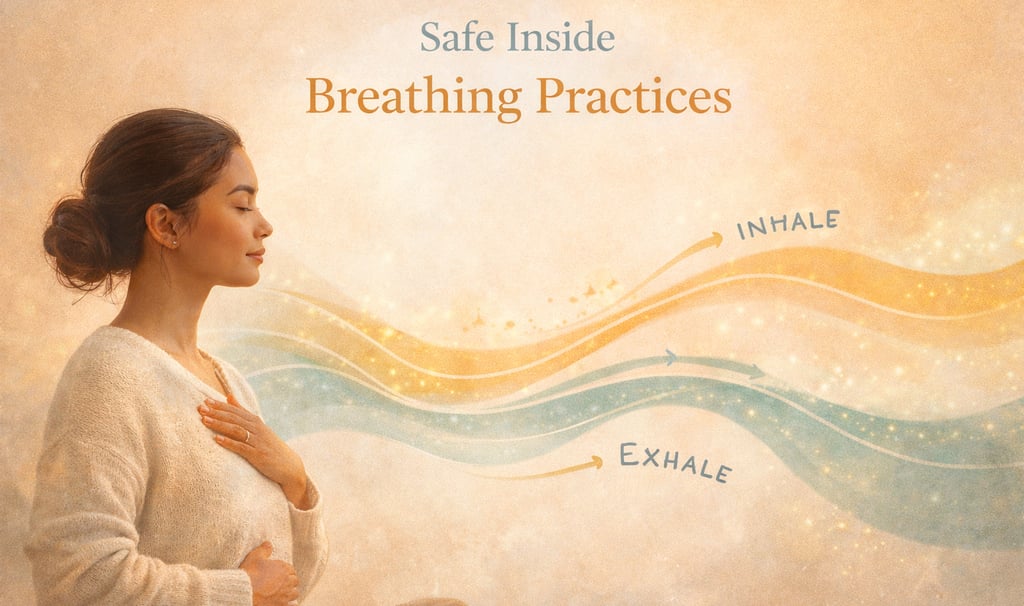
Breathing directly influences the autonomic nervous system.
faster, shallow breathing → activation
slower, longer exhale → calming
The goal isn’t to breathe “perfectly.”
It’s to gently signal to your body: that you are safe enough right now.
Simple Breathing Practices
7–11 Breathing
Inhale for a count of 7
Exhale for a count of 11
longer exhale activates calming response
reduces intensity without forcing stillness
Physiological Sigh
quick inhale through nose
followed by a quick second inhale
long exhale through mouth
Great for:
acute stress
emotional spikes
Box Breathing
inhail for a count of 4 – hold for a count of 4 – exhale for a count of 4 – hold for a count of 4
Best for:
focus
stabilization
Gentle Awareness Breathing
Simply notice your breath.
No change.
This builds:
awareness
connection
tolerance
When Breathing Doesn’t Work
Sometimes breathing can feel:
frustrating
inaccessible
activating
That doesn’t mean you’re doing it wrong.
It means your system may need:
movement
sensory support
© 2026 Coaching with Rhonda. All rights reserved.
Rhonda Tournay is a trauma-informed coach and educator specializing in nervous system regulation, neurodivergence, and emotional health — helping individuals, families, and professionals find safety and resilience through the Safe Inside™ Protocol.

