
Classroom Nervous System Regulation: Why It Matters for Learning
Classroom nervous system regulation explains why learning begins with safety, not instruction. Support focus, behaviour, and emotional regulation in students.
What This Means in the Classroom
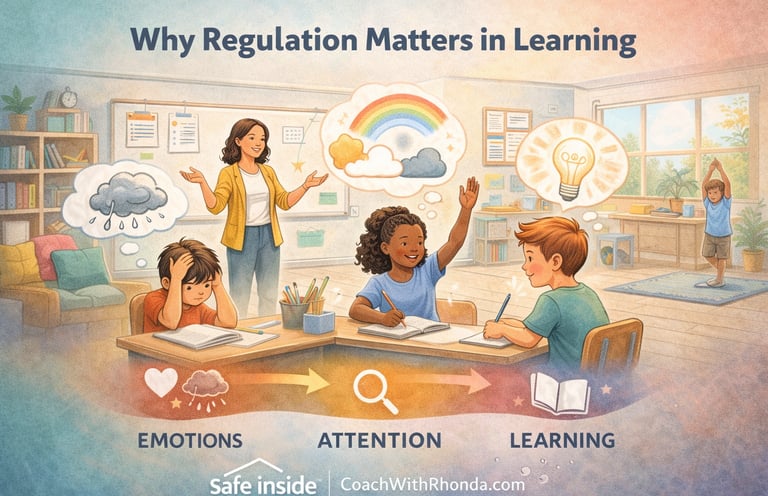
When we understand classroom nervous system regulation, we begin to see behaviour differently.
What looks like inattention, defiance, or lack of motivation is often a nervous system response, not a choice.
A student who is overwhelmed may struggle to focus.
A student who feels unsafe may become disruptive or shut down.
A student who appears disengaged may actually be working very hard to cope internally.
From a nervous system perspective, learning requires access to:
• safety
• connection
• regulation
Without these, the brain prioritizes survival over learning.
This is why strategies that focus only on behaviour, without addressing regulation, often lead to short-term compliance but not meaningful, lasting change.
Why Regulation Matters in Learning
When students are:
overwhelmed
anxious
overstimulated
Their brain shifts into survival mode.
And learning becomes secondary to survival.
Supporting Regulation Real Time
Supporting classroom nervous system regulation does not require complex interventions.
Small, consistent shifts can make a meaningful difference:
• creating predictable routines
• offering moments of pause and reset
• allowing movement and sensory input
• using tone, presence, and co-regulation
These approaches help students move from overwhelm into a state where focus, memory, and learning become more accessible.
Common Classroom Challenges (Reframed)
Instead of:
“disruptive behaviour”
Consider:
overwhelm
Instead of:
“not paying attention”
Consider:
nervous system dysregulation
Core Classroom Principles
1. Regulation Before Instruction
A regulated classroom learns faster and with less resistance.
2. Environment Impacts Behaviour
Noise, lighting, transitions, and unpredictability all matter.
3. Co-Regulation Shapes the Room
The teacher’s nervous system sets the tone.
Reduce Sensory Load
softer lighting
quieter transitions
fewer simultaneous instructions
Build Predictability
consistent routines
visual schedules
clear expectations
Integrate Regulation Moments
breathing breaks
movement
grounding
Create Safe Spaces
A calm area is not avoidance, it’s regulation support.
Practical Strategies
What Changes
When classrooms support nervous systems:
behaviour improves
engagement increases
emotional safety grows
In Closing
A regulated classroom isn’t quieter.
It’s safer.
And safety is what makes learning possible.
© 2026 Coaching with Rhonda. All rights reserved.
Rhonda Tournay is a trauma-informed coach and educator specializing in nervous system regulation, neurodivergence, and emotional health — helping individuals, families, and professionals find safety and resilience through the Safe Inside™ Protocol.

