
Nervous System Overwhelm in Children: Signs, Causes and Support
Sometimes it seems to come out of nowhere. One moment your child is fine… The next, everything falls apart. Tears. Anger. Shutdown. Resistance. It can feel confusing and at times, overwhelming for you too. But underneath these moments is something important: your child’s nervous system has reached its limit. And what looks like behaviour… is actually overwhelm.
What Is Nervous System Overwhelm?
Nervous system overwhelm happens when a child’s system takes in more than it can process, manage, or regulate.
This can be:
• sensory input
• emotional experiences
• environmental demands
• internal stress
When the system becomes overloaded, it shifts out of a calm, regulated state.
And the child loses access to:
• reasoning
• flexibility
• emotional control
This is not a choice.
It’s a physiological response.
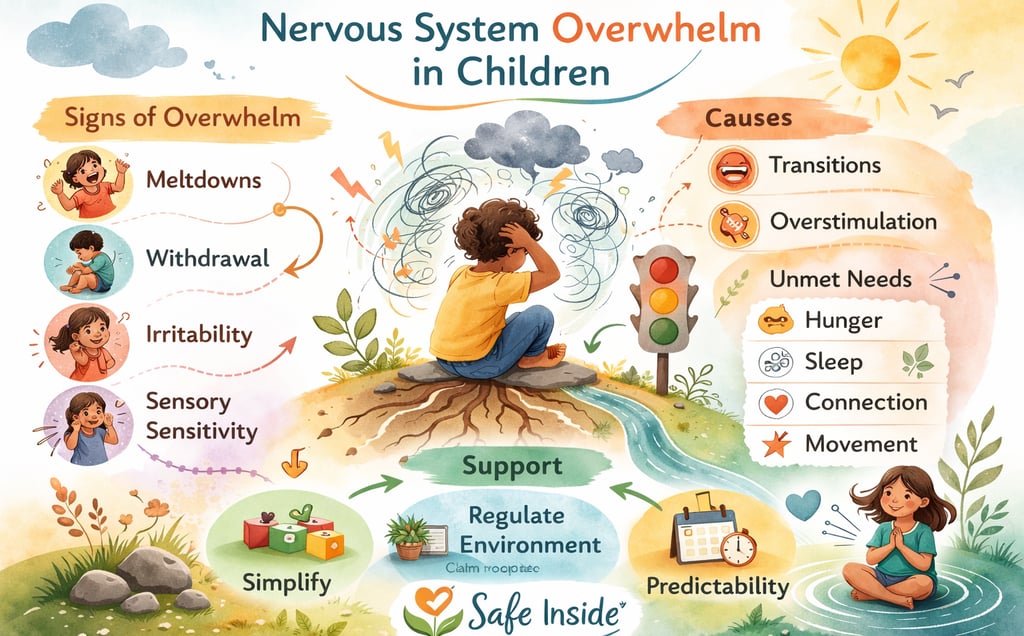
Common Signs of Overwhelm
Every child expresses overwhelm differently, but there are patterns.
You might notice:
meltdowns → crying, yelling, explosive reactions
withdrawal → shutting down, going quiet, avoiding interaction
irritability → snapping, low frustration tolerance
sensory sensitivity → noise, light, textures suddenly feel “too much”
These aren’t random behaviours,
they are signals that the nervous system is overloaded
Understanding the Nervous System States
When overwhelm happens, children often shift into survival states.
They may become:
activated (fight/flight) → intense, reactive, restless
shut down (freeze) → quiet, disconnected, withdrawn
Understanding these shifts helps you respond with clarity instead of confusion.
LINK: Understanding your child’s nervous system states
What Causes Overwhelm?
Overwhelm is rarely about just one thing.
It’s usually a build-up.
1. Transitions
Transitions are one of the biggest triggers.
Examples:
leaving the house
ending a preferred activity
switching environments
bedtime routines
Even “small” transitions can feel big to a nervous system.
2. Overstimulation
Children take in a lot of sensory information.
Too much input can overwhelm the system:
loud environments
bright lights
busy spaces
too many instructions at once
What seems manageable to an adult may feel intense to a child.
3. Unmet Needs
Sometimes overwhelm is the body signaling something is missing.
This can include:
hunger
fatigue
need for connection
need for movement
need for quiet
When these needs build up, the nervous system follows.
What Actually Helps
When a child is overwhelmed, the goal is not control.
It’s support.
1. Simplify
In moments of overwhelm, less is more.
fewer words
fewer instructions
fewer demands
Clarity helps the nervous system settle.
2. Regulate the Environment
Shift the external world to support the internal state.
You might:
lower noise
dim lights
reduce stimulation
create a quieter space
The environment can either escalate or soothe.
3. Increase Predictability
The nervous system feels safer when it knows what to expect.
This can look like:
consistent routines
visual schedules
clear transitions (“in 5 minutes we’re leaving”)
gentle preparation
Predictability reduces stress before it builds.
What Not to Do in the Moment
When a child is overwhelmed:
reasoning won’t land
consequences won’t land
explanations won’t land
Not because they don’t matter, but because the nervous system isn’t available for them yet.
The Safe Inside™ Perspective
From a Safe Inside™ lens:
overwhelm is not a behaviour problem
it’s a capacity problem
Your child isn’t choosing to fall apart.
Their system is doing exactly what it was designed to do under too much pressure.
When we reduce overwhelm instead of reacting to behaviour…
We create safety.
And safety is what allows regulation to return.
Bringing It Together
When you begin to recognize overwhelm:
You stop asking:
“Why are they acting like this?”
And start asking:
“What is their nervous system telling me right now?”
That shift changes everything.
If you want simple tools to help your child move from overwhelm back to calm:
© 2026 Coaching with Rhonda. All rights reserved.
Rhonda Tournay is a trauma-informed coach and educator specializing in nervous system regulation, neurodivergence, and emotional health — helping individuals, families, and professionals find safety and resilience through the Safe Inside™ Protocol.

