
The Nervous System Stress Cycle: Why You Feel Stuck (and How It Actually Begins to Shift)
Have you ever noticed how certain patterns seem to repeat—no matter how aware you are? You might feel overwhelmed, find ways to cope, feel a bit better… and then suddenly, you’re right back where you started. It can feel frustrating. Confusing. Even discouraging. But this isn’t a lack of willpower. What you’re experiencing is often something called the nervous system stress cycle. And once you understand how this cycle works, something important shifts: You stop seeing yourself as the problem And start understanding the pattern
What Is the Nervous System Stress Cycle?
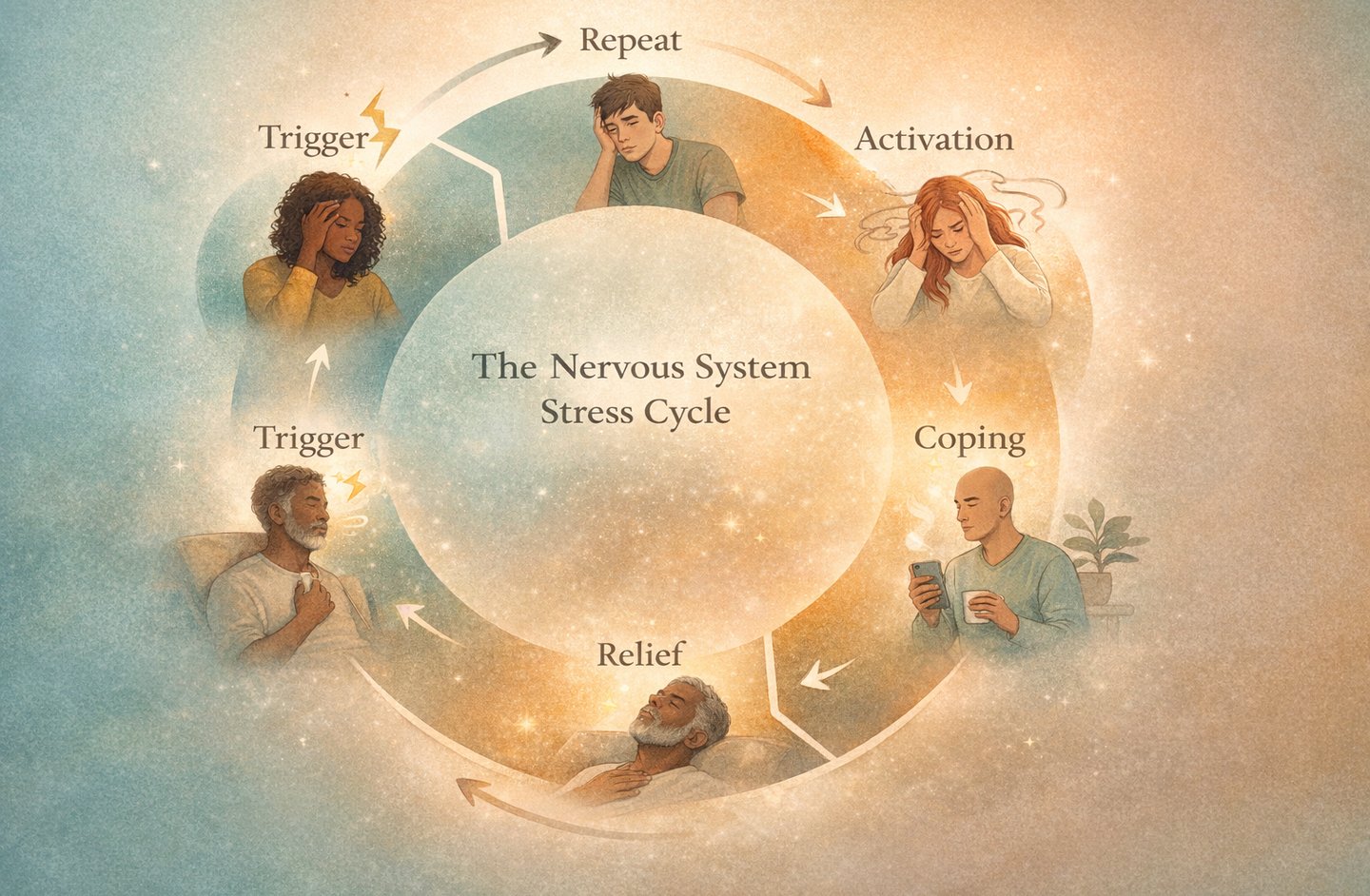
The nervous system stress cycle is a repeating loop the body uses to respond to stress, overwhelm, or perceived threat.
It typically follows this pattern:
Trigger → Activation → Coping → Relief → Repeat
Over time, this loop can become automatic.
Not because something is wrong with you, but because your nervous system is learning what helps you get through.
Breaking Down the Cycle
Trigger
Something activates your system.
This could be:
stress or pressure
emotional experiences
sensory overload
conflict or uncertainty
internal thoughts or memories
Sometimes the trigger is obvious.
Sometimes it’s subtle or cumulative.
Nervous System Activation
Your body may shift into different states like anxiety, shutdown, or overwhelm depending on what it perceives as safe or threatening.
Understanding how your nervous system shifts between states can help make sense of these responses.
This may feel like:
anxiety or urgency (fight/flight)
irritability or tension
fogginess or indecision (freeze)
exhaustion or shutdown
At this stage, your nervous system is prioritizing safety ... not logic.
Coping Response
Your system looks for relief.
This is where behaviours come in:
avoidance
overworking
scrolling or distraction
numbing
people-pleasing
withdrawing
These responses are not random.
They are attempts to regulate.
Relief (Temporary Regulation)
The coping strategy works, at least for a moment.
You feel:
calmer
distracted
less activated
more in control
This relief is important.
Because it teaches the nervous system:
“This helps.”
Repeat
Because the underlying activation hasn’t been fully supported…
the cycle repeats.
Over time, this can feel like:
• “Why does this keep happening?”
• “I thought I was doing better”
• “I keep ending up in the same place”
This is where having a simple process to interrupt the cycle can begin to create change.
Why This Cycle Can Feel So Stuck
The nervous system is not focused on long-term change.
It’s focused on immediate relief and survival.
So anything that reduces intensity—even temporarily—can become reinforced.
That means:
Avoidance can feel helpful
Numbing can feel necessary
Over-functioning can feel productive
Even if they lead to more stress later.
The Missing Piece: It’s Not About Control
Many people try to break the cycle by:
pushing harder
thinking differently
forcing behaviour change
But the cycle doesn’t shift through force.
It shifts through regulation and awareness.
How the Cycle Begins to Shift
Not by stopping it completely…
But by gently interrupting it.
1. Recognize the Pattern
Start noticing:
What tends to trigger you
What your body does next
What coping responses show up
Awareness creates space.
2. Reduce Intensity First
Before trying to “fix” anything:
Focus on calming the system.
3. Support the Nervous System (Not Just Behaviour)
Instead of asking: “How do I stop this?”
Try asking: “What does my nervous system need right now?”
This might be:
rest
movement
connection
sensory support
4. Make One Small Shift
You don’t need to change everything.
Just one point in the cycle.
pause instead of reacting
step away instead of pushing
name the feeling instead of avoiding it
Small changes create new pathways.
5. Repeat (This Part Matters Most)
Change doesn’t happen through one breakthrough.
It happens through consistent, small moments of support.
Over time, the nervous system learns:
There are other ways to respond
I don’t have to stay in this loop
The Safe Inside™ Perspective
From a Safe Inside™ lens, the stress cycle is not a problem to eliminate.
It’s a pattern to understand.
What looks like being stuck is often a nervous system doing its best to protect, regulate, and adapt.
When we shift from judgment → understanding…
The system begins to soften.
And change becomes possible.
If you’d like practical tools to help interrupt these cycles and support your nervous system: Practical tools to help you regulate your nervous system, navigate overwhelm, and support yourself in real moments.
© 2026 Coaching with Rhonda. All rights reserved.
Rhonda Tournay is a trauma-informed coach and educator specializing in nervous system regulation, neurodivergence, and emotional health — helping individuals, families, and professionals find safety and resilience through the Safe Inside™ Protocol.

