
Supporting Neurodivergent Nervous Systems: A Practical Guide for Professionals
Neurodivergent individuals don’t have broken systems. They have different nervous system patterns. And many challenges arise not from the individual… But from environments that don’t support those patterns.
Understanding Neurodivergent Nervous Systems
Neurodivergent systems often experience:
increased sensory sensitivity
different processing speeds
heightened overwhelm thresholds
strong need for predictability
These are not deficits.
They are differences.
Common Misinterpretations
“Too sensitive” → sensory overload
“Not trying” → overwhelmed system
“Rigid” → need for predictability
“Emotional” → regulation difficulty
Core Principles
1. Reduce Overwhelm, Increase Capacity
Support before expectation.
2. Environment Matters More Than Effort
Adjust surroundings, not just behaviour.
3. Predictability Creates Safety
Clarity reduces nervous system load.
4. Regulation Is Individual
What works for one may not work for another.
Practical Support Strategies
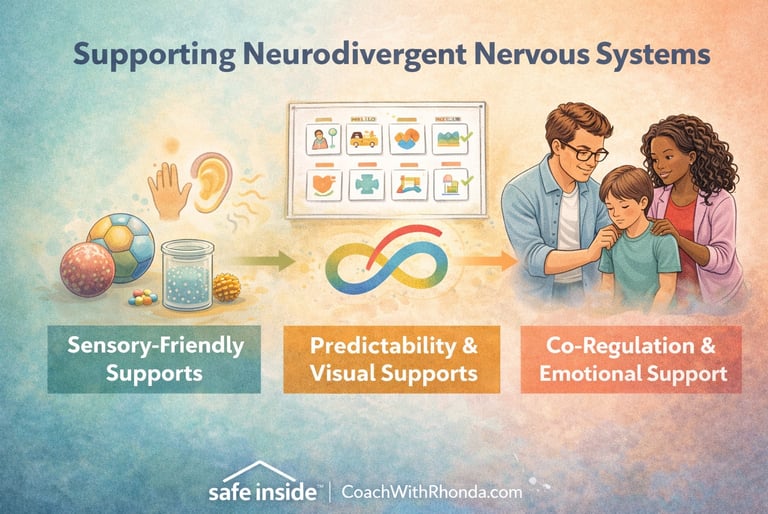
Sensory Support
noise reduction
movement options
texture preferences
Clear Communication
simple instructions
visual supports
processing time
Flexible Expectations
pacing
output methods
breaks
Regulation Tools
grounding
breathing
safe spaces
The Safe Inside™ Perspective
Neurodivergent individuals are not problems to solve.
They are systems to understand.
When we support the nervous system:
behaviour changes naturally.
In Closing
Support the system.
And everything built on top of it becomes more accessible.
© 2026 Coaching with Rhonda. All rights reserved.
Rhonda Tournay is a trauma-informed coach and educator specializing in nervous system regulation, neurodivergence, and emotional health — helping individuals, families, and professionals find safety and resilience through the Safe Inside™ Protocol.

